
What is a Composite?


What is a Composite?
A composite is an engineered material formed by combining two or more materials whether similar or different in structure at a macroscopic level in order to achieve superior properties. Through this combination, the weaknesses of individual materials are minimized while their strengths are integrated, resulting in a new, higher performance structure.
Composite materials generally consist of two primary components: the matrix and the reinforcement. The matrix is the binding phase that holds the reinforcement together and enables load transfer within the structure. The reinforcement material provides strength, stiffness, and mechanical performance to the composite.
As a result of the interaction between these two distinct phases, the composite structure exhibits physical and mechanical properties that are different from and often superior to those of its individual components.
General Properties of Composite Materials
Composite materials are engineered to enhance specific performance criteria depending on the application area. During the manufacturing process, one or more of the following properties are typically targeted for improvement:
High mechanical strength (tensile, compressive, flexural, and impact resistance)
Fatigue strength and wear resistance
Fracture toughness
Corrosion resistance
Thermal conductivity or thermal insulation performance
High-temperature resistance
Electrical conductivity or insulation
Acoustic insulation or sound absorption
Stiffness and dimensional stability
Low weight
Aesthetic appearance and surface quality
Composite materials are designed according to defined performance requirements, providing not only technical superiority but also contributing to reduced total operating costs through long service life and low maintenance needs. The fundamental principle is to minimize the weaknesses of component materials while achieving a more durable and higher-performance structure.
Today, one of the most widely used composite types is polymer matrix composites. These structures incorporate organic or inorganic reinforcement materials such as glass fiber (fiberglass), carbon fiber, and aramid fibers.
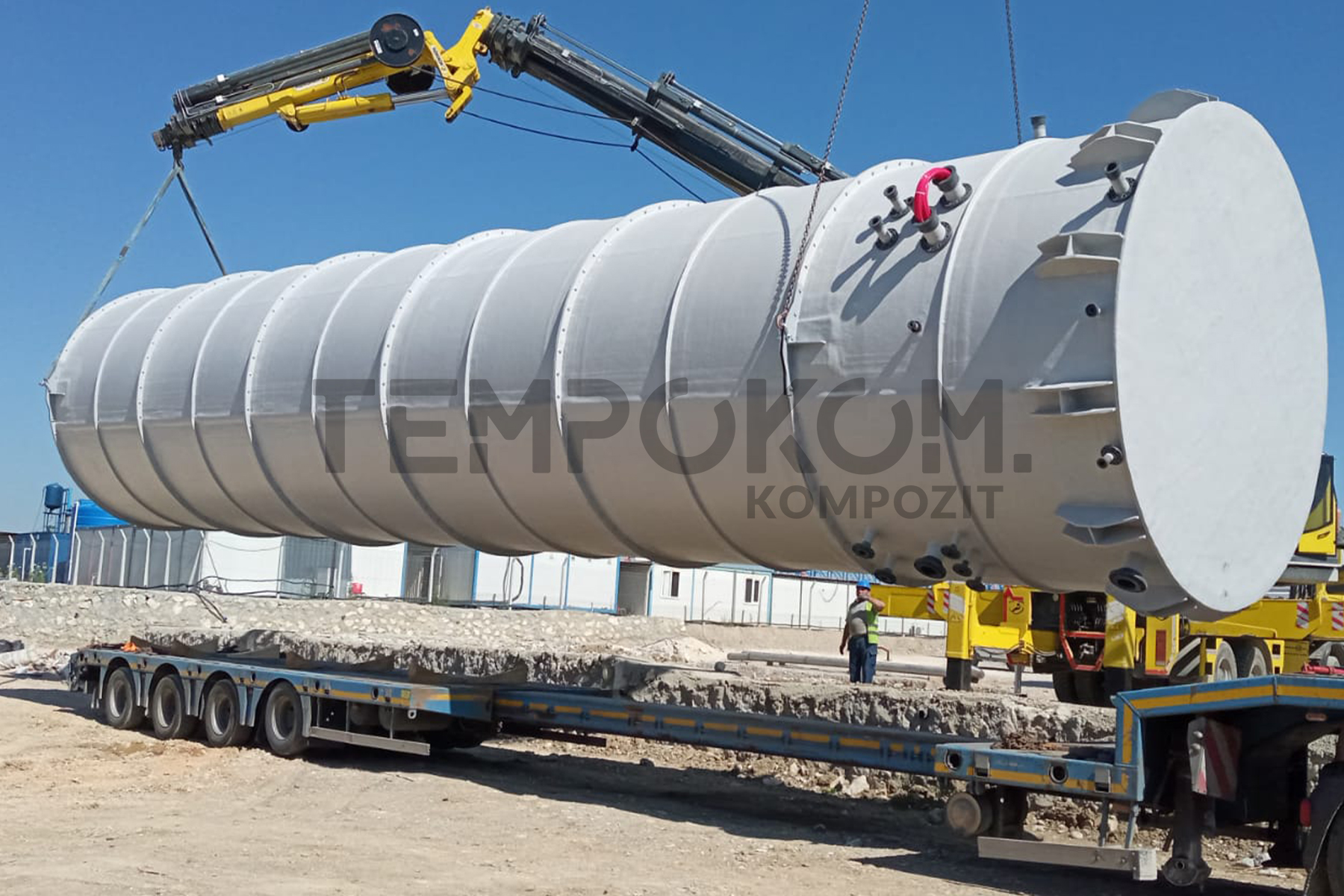
As Tempo Kompozit, our products are manufactured from fiberglass composite material reinforced with glass fiber and cured with a high-performance resin system. Thanks to this structure, our products offer corrosion resistance, lightweight construction, high mechanical strength, and long-lasting performance.
Product Features
Lightweight
Our products have approximately one-quarter the specific gravity of steel. Despite their low weight, they provide high specific strength, offering significant advantages in transportation, installation, and operational processes.
Durable and Long-Lasting
Thanks to their high corrosion resistance, they withstand humid environments, aggressive chemicals, and harsh weather conditions. When properly designed and used under suitable operating conditions, they ensure extended service life.
High Strength and Flexible
Their tensile and flexural strength values exceed those of many metallic materials. Production can be tailored to achieve the required strength and flexibility levels in accordance with specific project needs.
Insulating Properties
They provide both thermal and electrical insulation. Products can be manufactured as opaque or translucent when required, and enhanced with additives to achieve flame-retardant and UV-resistant properties.
Cost-Effective
With molding and design flexibility, reinforcement can be optimized and applied only where needed. This enables material savings and the development of lighter, more cost-efficient solutions.
Additionally, since large and complex components can be manufactured as a single piece, installation time and labor costs are significantly reduced.