
What is GRP?

What is GRP
image
image
image

What is GRP?

GRP (Glass Fiber Reinforced Polyester) is a composite material produced by molding glass fiber as the reinforcing element together with polyester resin as the binding matrix. In international literature, it is also referred to as FRP (Fiber Reinforced Polymer / Fiberglass Reinforced Polyester) or GRP (Glass Reinforced Polyester).

The fundamental principle of the manufacturing process is the homogeneous impregnation of glass fibers with polyester resin, followed by a controlled curing (polymerization) process. Through a chemical reaction, the resin polymerizes into a rigid, insoluble, and infusible structure.

Thanks to this cross-linked thermoset structure, GRP offers high mechanical strength, excellent corrosion resistance, and long service life.

Advantages of Using GRP

Lightweight:
GRP has approximately one-quarter the specific gravity of steel. Despite its low weight, it provides high specific strength. This characteristic facilitates transportation and installation while reducing structural loads.

Corrosion Resistant:
It demonstrates excellent resistance to humid environments, aggressive chemicals, and harsh weather conditions. This makes it particularly suitable for long-term use in wastewater treatment plants, chemical processing facilities, and industrial environments.

High Strength and Design Flexibility:
Its tensile and flexural strength values are superior to many metallic materials. Through fiber orientation and laminate configuration, mechanical properties can be tailored to meet specific project requirements.

Insulating Properties:
GRP offers both thermal and electrical insulation. It can be manufactured as opaque or translucent, and performance can be enhanced with additives to provide flame-retardant and UV-resistant properties.

Cost-Effective:
Thanks to molding flexibility, reinforcement can be optimized and applied only where required. Large and complex components can be manufactured as a single piece, reducing assembly time and labor costs.

Long Service Life:
With high resistance to environmental factors, GRP ensures extended service life when properly designed and used under appropriate operating conditions.

Components

Resin (Matrix)

The resin used in GRP products forms the binding phase of the structure and provides properties such as chemical resistance, flexibility, surface quality, and UV resistance. Depending on the application area and environmental conditions, different resin systems are selected.

The most commonly used resin types are orthophthalic polyester, isophthalic polyester, and vinyl ester resins.


Glass Fiber (Reinforcement)

Glass fiber is the primary reinforcement material in GRP. Owing to its high tensile strength, non-combustible nature, and dimensional stability, it imparts strength and rigidity to the composite structure.

The orientation and configuration of the fibers directly influence the mechanical performance of the final product.


Chemical Additives

In addition to the chemicals that initiate the curing reaction, various additives may be incorporated to enhance performance. UV stabilizers, flame retardants, and smoke-suppressant additives are among the key components that improve the physical and chemical durability of GRP.


Pigments

By incorporating pigments into the resin, GRP products can be manufactured in the desired colors. This provides both aesthetic advantages and visual compatibility tailored to specific project requirements.


When selecting materials, not only the initial investment cost but also the total lifecycle cost should be evaluated. Although steel may appear more economical at first, maintenance and corrosion-related expenses often make GRP the more cost-effective solution in many applications.

GRP is lighter, easier to install, and reduces labor costs. It is resistant to permanent deformation and offers long service life with minimal maintenance requirements.

Production Areas

GRP Grating, Platform, and Handrail Systems

GRP gratings provide safe flooring solutions with their lightweight structure, high mechanical strength, and superior corrosion resistance. Platform systems constructed using these gratings deliver long-term performance against chemical exposure, humid environments, and heavy-duty operating conditions.

Anti-slip surface options enhance occupational safety, while GRP handrail systems complement platforms by providing reliable fall protection.


GRP Lamella and Weir Systems

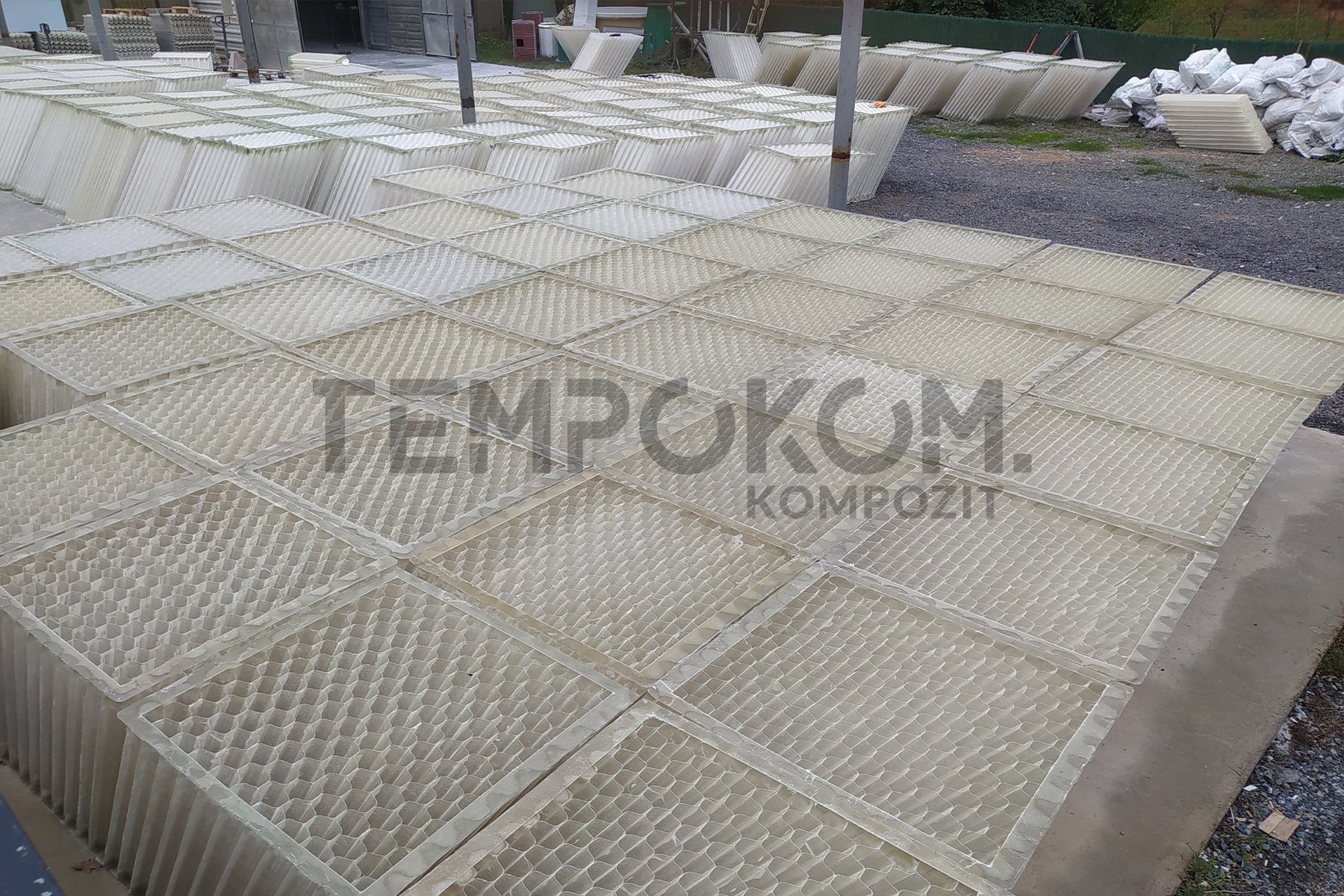
GRP lamella systems improve sedimentation efficiency in treatment plants, enhancing effluent water quality. Their compact design enables space savings, while their corrosion-resistant structure ensures long service life.

GRP weir systems provide balanced and controlled water discharge, optimizing hydraulic performance. They can be custom-designed to suit various basin types and specific project requirements.


Desulfurization Tanks

GRP desulfurization tanks are engineered to withstand high temperatures and highly corrosive environments. They are safely used in facilities operating under severe process conditions, such as power plants, waste incineration plants, and chemical and petrochemical industries.


Odor Control Units

GRP odor control systems are designed to reduce or eliminate gases and unpleasant odors, particularly in wastewater pumping stations and wastewater treatment plants.

Within this scope, GRP scrubber units, piping systems, and connection components are manufactured to provide integrated and corrosion-resistant solutions.


GRP Storage and Tank Systems

GRP storage tanks and vessels are used for storing, mixing, or dosing chemicals that may cause corrosion. These systems can be manufactured in customized dimensions and thicknesses, offering properties such as acid resistance, suitability for various pH ranges, UV resistance, low thermal conductivity, and flame-retardant performance.


GRP Covers and Enclosure Solutions

GRP covers and enclosure systems are used to securely seal open structures in treatment plants and industrial facilities. They help reduce odor emissions, control evaporation, and protect against external factors.

Thanks to their lightweight, durable, and walkable structure, they provide long service life with minimal maintenance requirements. Production can be tailored to project-specific dimensions and designs.